

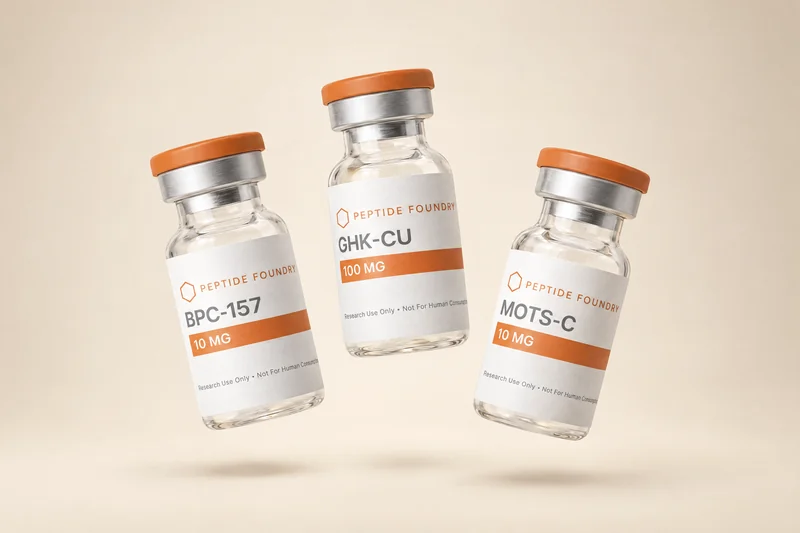

BPC-157
Research Use Only · Not for Human Consumption
A 15-amino-acid peptide originally isolated from gastric juice; used in preclinical research since the early 1990s.


A 15-amino-acid peptide originally isolated from gastric juice
Chemistry
| CAS# | Formula | Molar Mass |
|---|---|---|
| CAS Number: 137525-51-0 | Molecular Formula: C62H98N16O22 | Molar Mass: 1419.55 g/mol |
What is BPC-157?
BPC-157 is a 15-amino-acid peptide supplied for laboratory research. Refer to the batch-specific certificate of analysis for identity, purity, and analytical results. Not for human or animal use.
BPC-157, short for "Body Protection Compound-157," was first identified during research on human gastric juice in the early 1990s. Croatian researchers at the University of Zagreb, led by Dr. Predrag Sikirić, originally isolated this sequence from a larger protective protein found naturally in the stomach—which is where the "Body Protection Compound" name originated.
Over the past three decades, BPC-157 has become one of the more extensively studied peptides in preclinical research. Hundreds of peer-reviewed publications have examined its interactions with various biological systems, including nitric oxide pathways, growth factor signaling, and angiogenic processes.
Research interest has spanned multiple biological systems—from gastrointestinal and musculoskeletal models to neurological and vascular studies. While preclinical data has accumulated over 30+ years, most published findings come from animal or in vitro studies. This product is intended for research use only.
How should BPC-157 be stored?
Peptide Foundry research peptides are supplied lyophilized (freeze-dried). Keep sealed vials cool, dry, and protected from light until reconstitution.
After reconstitution, refrigerate prepared solutions and use sterile technique. For general laboratory diluent and handling notes, see lyophilized peptide reconstitution.
Certificate of Analysis
Every batch of BPC-157 is tested by Freedom Diagnostics for purity, identity, heavy metals, sterility, and endotoxin. The full certificate is below.
BPC-157 · 10mg
Peptide Purity · HPLC @ 214 nm
99.97% — exceptional research-grade purity
Area-normalized against all peptide-related peaks. Identity confirmed by chromatographic retention-time match to a reference standard.
Every test on this certificate
COA documents are updated with each new batch. Contact support for batch-specific documentation.
Related Research Compounds
Frequently purchased with BPC-157


Add all 3 items to your cart
$335
Further reading
References
- Chang CH, et al. Pentadecapeptide BPC 157 enhances the growth hormone receptor expression in tendon fibroblasts. Molecules. 2014. PubMed: 25415472
- Staresinic M, et al. BPC 157 accelerates healing of transected rat Achilles tendon and in vitro stimulates tendocyte growth and VEGF secretion. Journal of Orthopaedic Research. 2003. PubMed: 14554208
- Sikiric P, et al. Stable gastric pentadecapeptide BPC 157: novel therapy in gastrointestinal tract. Current Pharmaceutical Design. 2011. PubMed: 21548867
- Sikiric P. The effect of pentadecapeptide BPC 157 on gastrointestinal tract. Journal of Physiology and Pharmacology. 2013. PubMed: 24304574
